|
General information
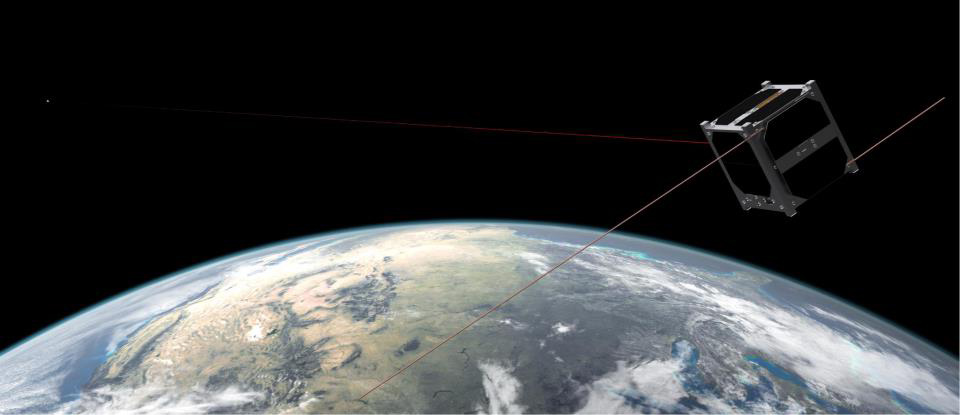
The use of micro- and nanosatellites in space missions have been one of the hot topics in space research and space technology
during the last years. As opposed to traditional spacecraft missions which can take decades to prepare and may cost up to
billions of Euros, microsatellites (<100 kg) and nanosatellites (<10 kg) offer a quick, low-cost alternative for atmospheric
and space research, which is ideal for early career people. Fleets of micro-and nanosatellites could also be used to perform multi-point measurements of targets
(e.g. asteroids and comets). Possible applications of micro- and nanosatellites include
- Comet and asteroid research
- Investigations into the terrestrial atmosphere and ionosphere
- Meteorite research and tracking
- Planetary plasma and magnetospheric research
- Remote sensing of other planets and satellites
However, in order to plan missions involving such small satellites successfully, intensive interaction and cooperation between scientists
and space technologists are necessary, which is still lacking in some potential key applications.The early career scientist workshop/summer
school aims to
- Give participant an overview into the most pivotal research questions in planetary and atmospheric sciences
- Highlight the possible potential of microsatellites in those areas
- Explore novel applications of microsatellites in a multitude of different fields including astronomy, planetary
and atmospheric sciences, geosciences and astrobiology
- Foster the interaction between space researchers and technologists
- Allow participants to start the design and planning of new space missions
- Contribute to the training of a new generation of space researchers
The
Stockholm University Astrobiology Centre, the
University of Tartu, the European Astrobiology Campus,
and the Nordic Network of Astrobiology will function as co-organisers of the
course.
The course will consist of lectures by leading scientists,
planning of a micro- or nanosatellite project in small groupps as well as open discusssions.
Participants will also have the possibility to display
their own research results in a poster session. Furthermore, a half-day excursion to
interesting sites in the area (Ice Age Museum, Lake Peipus) is included as a social programme.
The event is aimed for graduate (masters and
Ph. D.) students and early career scientists (up to 8 years after their
first Ph. D. in a related field) in fields relevant to astrochemistry and
astrobiology. The event is open to applicants from all nationalities.
However, the application deadline has expired now.
Registration
Registration will be at Hotel Dorpat on Sunday August 5th from 14:00 to 19:00 and at the venue (Biokeskus, Riia 23b) on Monday August 6th from 09:00 to 09:30. People living at Hektor Hostel and arriving by bus are encouraged to pass by Hotel Dorpat for registration before continuing to the hotel.
Course fees
The following course participation fees apply (prices in EUR):
Participation fees cover
- Lunches and coffee breaks from 6 August 2018 to 11 August 2018
- Excursion with dinner on 9 August, dinner at 10 August and farewell dinner on 11 August (Other dinners are NOT included)
- Buffet breakfasts for people living at the Hotel Dorpat
- People at Hector Hostel can make their own breakfasts and dinners (well-equipped kitchen available).
- Exercises
- Transfer between Tartu and Toravere Observatory
- Course material
In addition to free meals and excursions, we also have the possibility to offer free lodging for a limited number of participants.
Those have been notified and will be offered free shared double room in Hector Hostel with shared facilities,
meals and participation in the excursion. Other participants (apart from invited speakers)
have to find own funds for travel and accomodation. The following accommodations are available for special prices and can
be booked upon registration (participants are free to sort out their own accommodation also independently):
The quoted accommodation prices are for 7 nights from August 5th (arrival) to August 12th (departure) in the respective category. Extra nights before and after the event have to be booked and paid individually.
Venue
Lectures and poster sessions will take
place in the Estonian Biocentre at Tartu University, Riia 26b, EE - 50411, Tartu. Please see the Venue
& Access page for details. Exercises will be carried out at Toravere Observatory (transfer will be provided)
Lecturers
The following people will give presentations at the
summer course:
David Cullen, Cranfield University, UK
Wolf Geppert, Stockholm University, Sweden
Maria Gritsevitch, University of Helsinki, Finland
Erik Ilbis , University of Tartu, Estonia
René Laufer , Baylor University, Texas, USA
Joseph A. Nuth, NASA Goddard Space Flight Center, USA
Wendy Okolo, NASA Ames Research Center, USA
Mihkel Pajusalu, MIT, USA and Tartu Observatory, Estonia
Jaan Praks, Aalto University, Fi
Andris Slavinskis, NASA Ames Research Center, USA and Tartu Observatory, Estonia
Colin Snodgrass, Open University, UK
Morio Toyoshima, NICT, Japan
Kaupo Voormansik, University of Tartu, Estonia
Organisers
The event will be organised by the Nordic
Network of Astrobiology, the University of Tartu and the European Astrobiology Campus.
Dr. Wolf Geppert from Stockholm University will serve as the main
contact person. The organisers are looking forward to welcoming you at the
course. See you in Tartu in August 2018!
Application
Deadline for application is the 31 May 2018.Please see the Application
page for details about the application.

Tere tulemast Eestisse!
|